Ocean ecology / Connections, not clichés

Where Sharks Fit in the Food Web

Sharks can be hunters, filter feeders, scavengers and prey. Their ecological roles depend on which shark you mean—and where it lives.

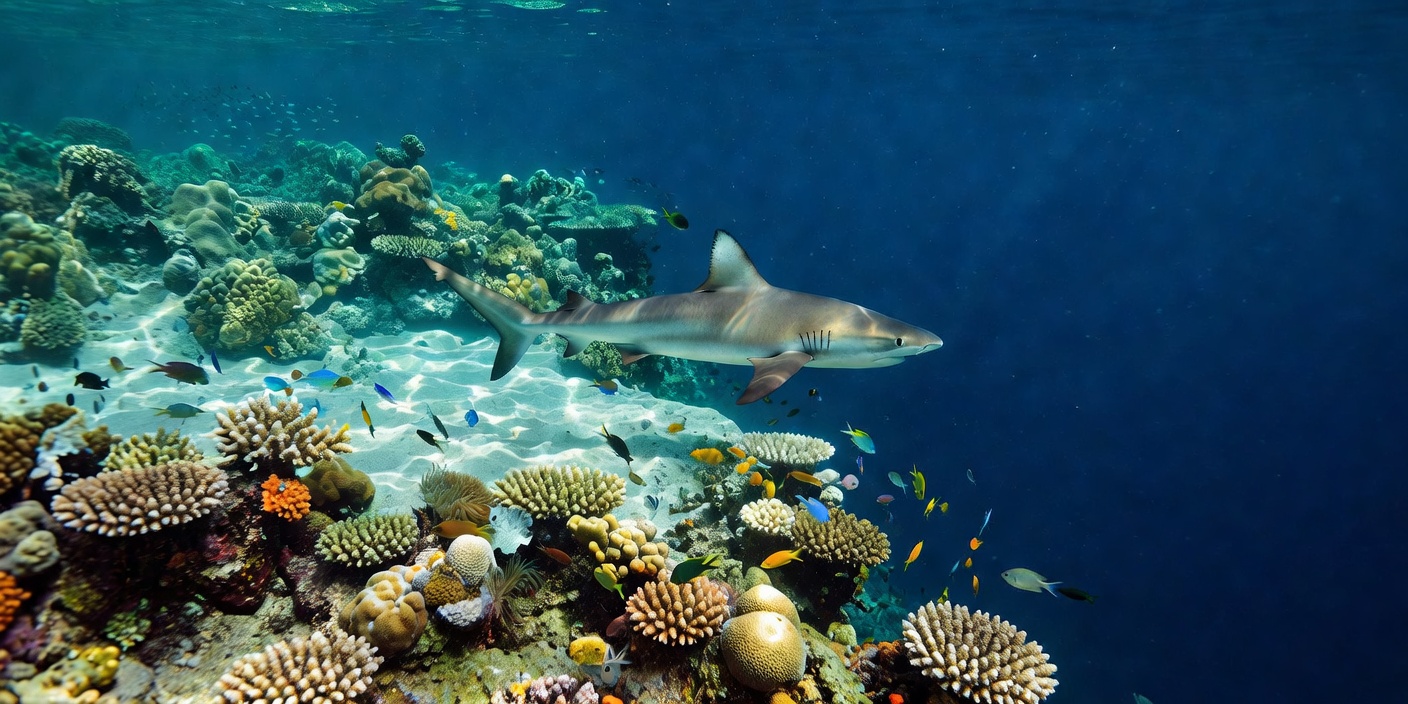
Reef shark swimming above a coral edge where shallow reef habitat meets deeper blue water

More than one place in the web

A food web is a network. A single straight chain leaves important connections out.

Predation

Eating—and influencing behaviour

Sharks consume other animals. Their presence can also change where prey feed or how they move, even without a capture.

Those effects are not identical in every ecosystem, and their strength needs to be studied locally.

Filter feeding

Small food, large animal

Whale sharks feed on plankton and other small organisms. They show why body size alone cannot tell you a shark’s place in a food web.

Seasonal concentrations of food can bring them together in particular areas.

Scavenging & being prey

Connections run both ways

Some sharks eat carrion. Sharks themselves—especially juveniles and smaller species—can be eaten by other animals.

The same species may occupy different roles as it grows.

Compare the habitats

Follow food, shelter and movement before drawing conclusions.

Reefs & coasts

ConnectionsReef edges, seagrass and coastal shallows can provide feeding grounds, shelter or nursery habitat, depending on the species.

What can changeHabitat loss, coastal development and local fishing can affect sharks and the prey they rely on.

Open ocean

ConnectionsMobile predators and filter feeders track shifting food resources. A journey can link several habitats and management areas.

What can changeFishing gear, vessel traffic and changing ocean conditions can overlap with feeding or migration routes.

Deep & cold water

ConnectionsFood availability, low temperatures and darkness shape feeding strategies and rates of growth.

What can changeSome slow-growing species are sensitive to fishing mortality. Limited observation can make risks harder to measure.
Match protection to the pressure

“Save sharks” is a starting point. Effective action needs more detail.

The misconception

“Every shark faces the same threats.”

Life histories and exposure differ.

Fishing is a major pressure for many sharks, but the type of fishery, habitat use, growth rate and reproduction all influence risk. Vessel strikes are a particular concern for some surface-feeding species.

The misconception

“One protected area solves everything.”

Boundaries must fit real movement.

Habitat protection can help, especially at important coastal sites. Wide-ranging sharks may also need fisheries measures, trade controls, monitoring and cooperation across borders.

A careful claim is a stronger claim. Shark losses can affect food webs, but the outcome depends on the species and ecosystem. Avoid promises that every shark creates the same “balance” everywhere.

Be a better ocean observer

Curiosity is useful when it leaves wildlife undisturbed.

  • Observe without touching, chasing, feeding or blocking an animal’s path.
  • Choose wildlife operators that follow local rules and explain their approach to animal welfare.
  • Follow local water-safety advice; an educational guide is not an assessment of encounter risk.
  • Check species-specific evidence before sharing a conservation claim.
Put a species name to the story →

Go deeper with reliable sources

This site is an independent educational resource and is not affiliated with these organisations.