Species guide / Start with habitat

Different Sharks, Different Lives

Look at the head, fins and feeding strategy—not just the silhouette. These five species reveal how much variety the word “shark” holds.

Habitats overlap. The groups below are a starting point, not fixed boundaries.

Coasts, reefs and nearby waters

From a resting bottom-dweller to an active coastal traveller.

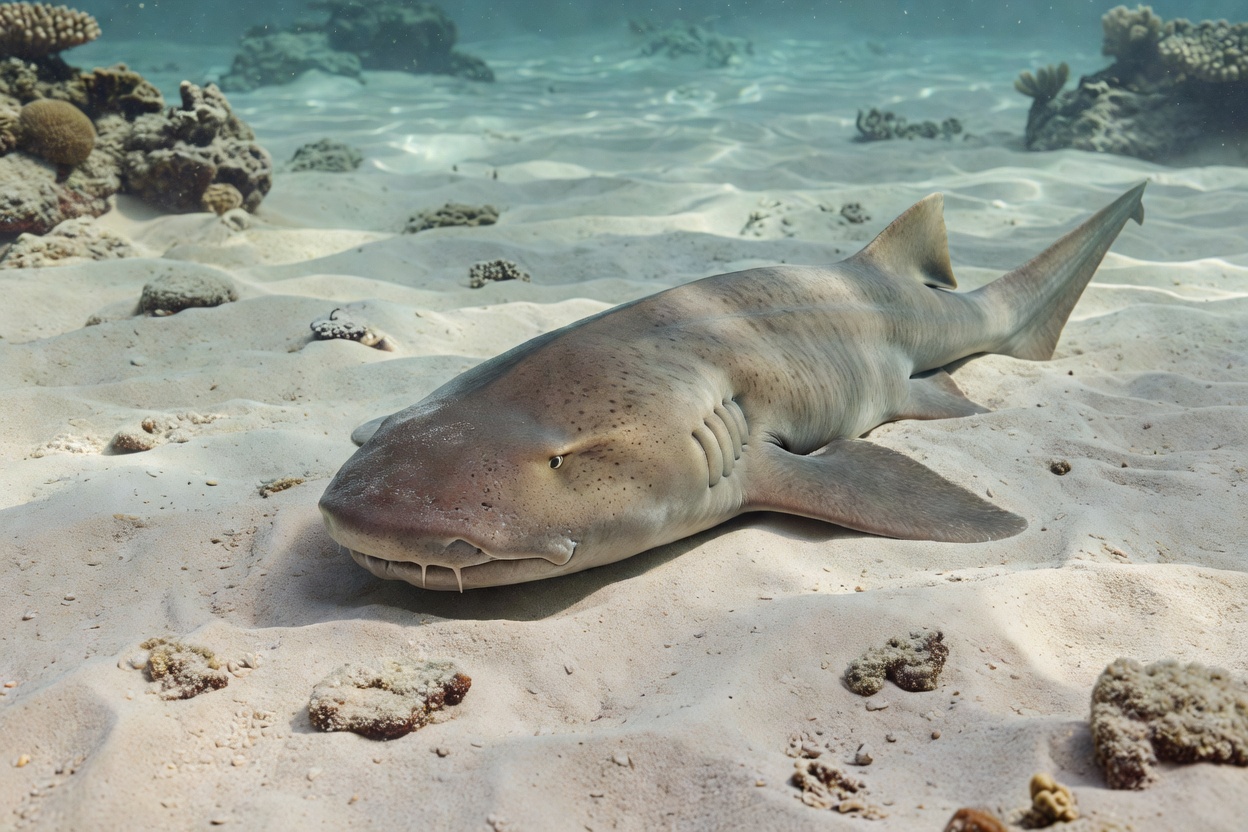
Nurse shark resting on sand with its rounded head and small mouth barbels visibleBottom-dweller

Nurse shark

Ginglymostoma cirratum

Look for: a broad, rounded head, mouth barbels and a long tail. Often seen resting on the bottom in warm, shallow Atlantic waters.

Food: fish and bottom-dwelling invertebrates, taken using strong suction.

Conservation context: coastal habitat degradation and capture in fisheries can affect populations. Resting does not make a shark safe to touch or approach closely.
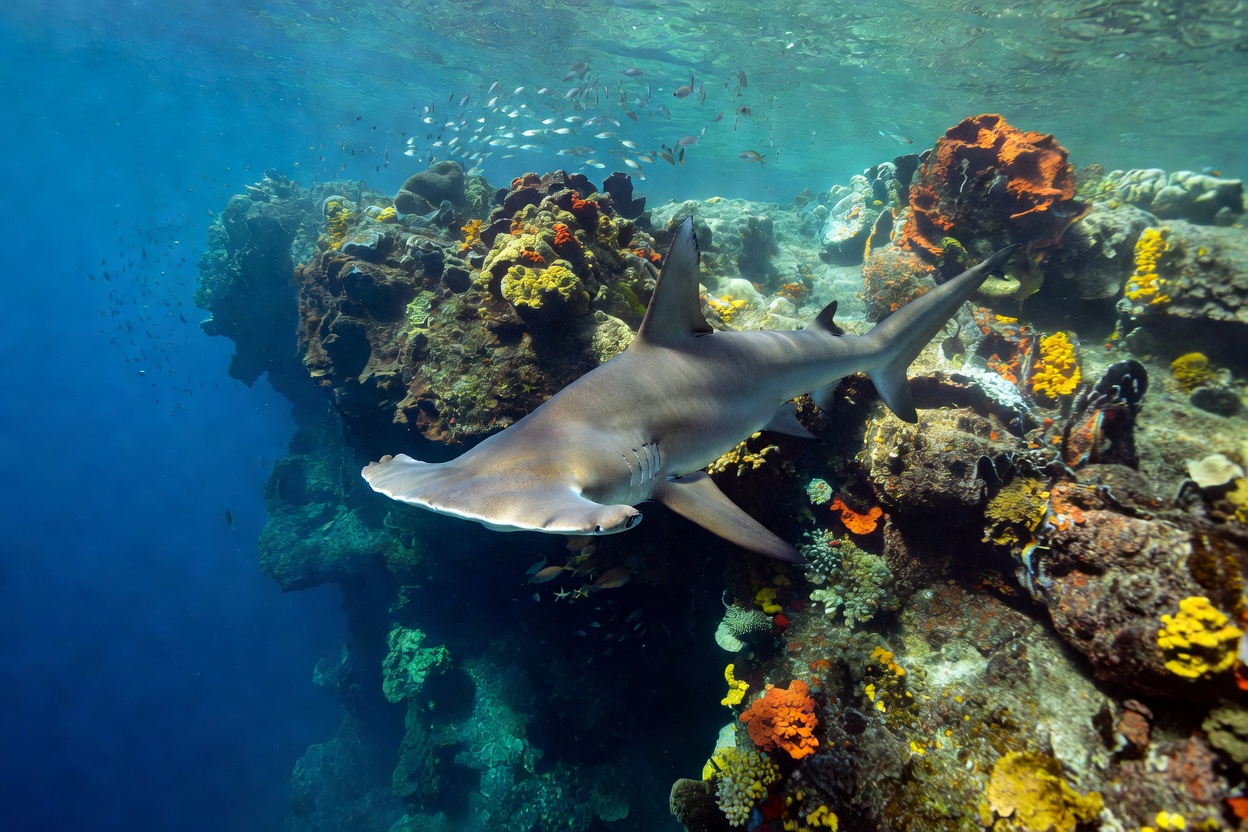
Scalloped hammerhead swimming beside a coastal drop-off, showing the indented front edge of its headCoastal & offshore

Scalloped hammerhead

Sphyrna lewini

Look for: the broad hammer-shaped head with a scalloped front edge. Young sharks use coastal nursery areas; adults also travel offshore.

Food: fish, squid and other animals, including rays.

Conservation context: targeted fishing and incidental capture are major pressures. Protecting nursery habitats and managing fisheries address different parts of its life cycle.

Wide-ranging swimmers

These sharks move between habitats. Their diets remain strikingly different.

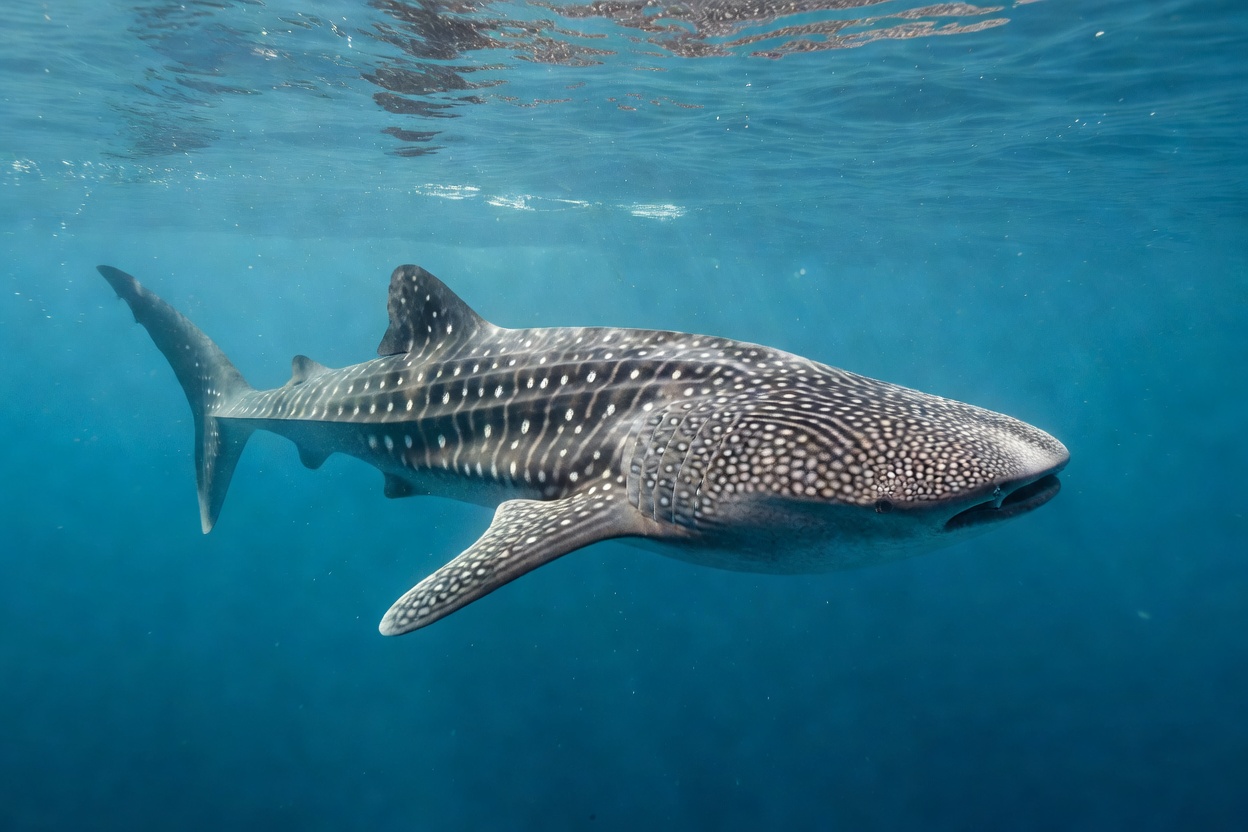
Whale shark in open tropical water with white spots and stripes clearly visible along its flankFilter feeder

Whale shark

Rhincodon typus

Look for: a broad, flattened head, a mouth at the front and a distinctive pattern of pale spots and stripes.

Food: plankton and other small organisms filtered from water. It uses tropical and warm-temperate coastal and offshore habitats.

Conservation context: fishing, vessel strikes and poorly managed wildlife tourism can create risks. Large size does not mean a population can recover quickly.

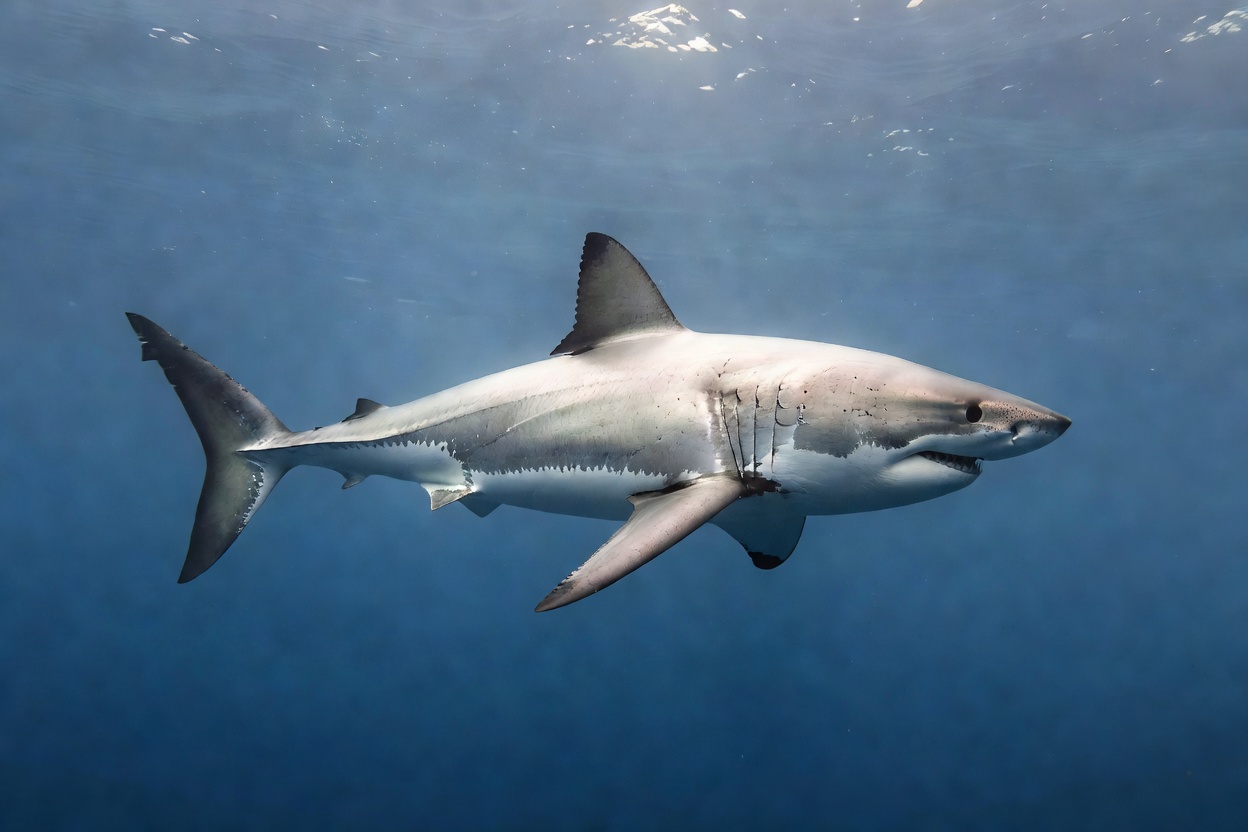
Great white shark in temperate blue water with a conical snout, triangular dorsal fin and white bellyActive predator

Great white shark

Carcharodon carcharias

Look for: a conical snout, robust body, triangular dorsal fin and a dark upper body above a pale underside.

Food: fish and other marine animals. Diet changes with size; larger individuals may hunt marine mammals or scavenge carcasses.

Conservation context: fishing mortality and slow reproduction are important concerns. Population trends and protections differ between regions.

Cold northern waters

A different pace of life beneath the surface.

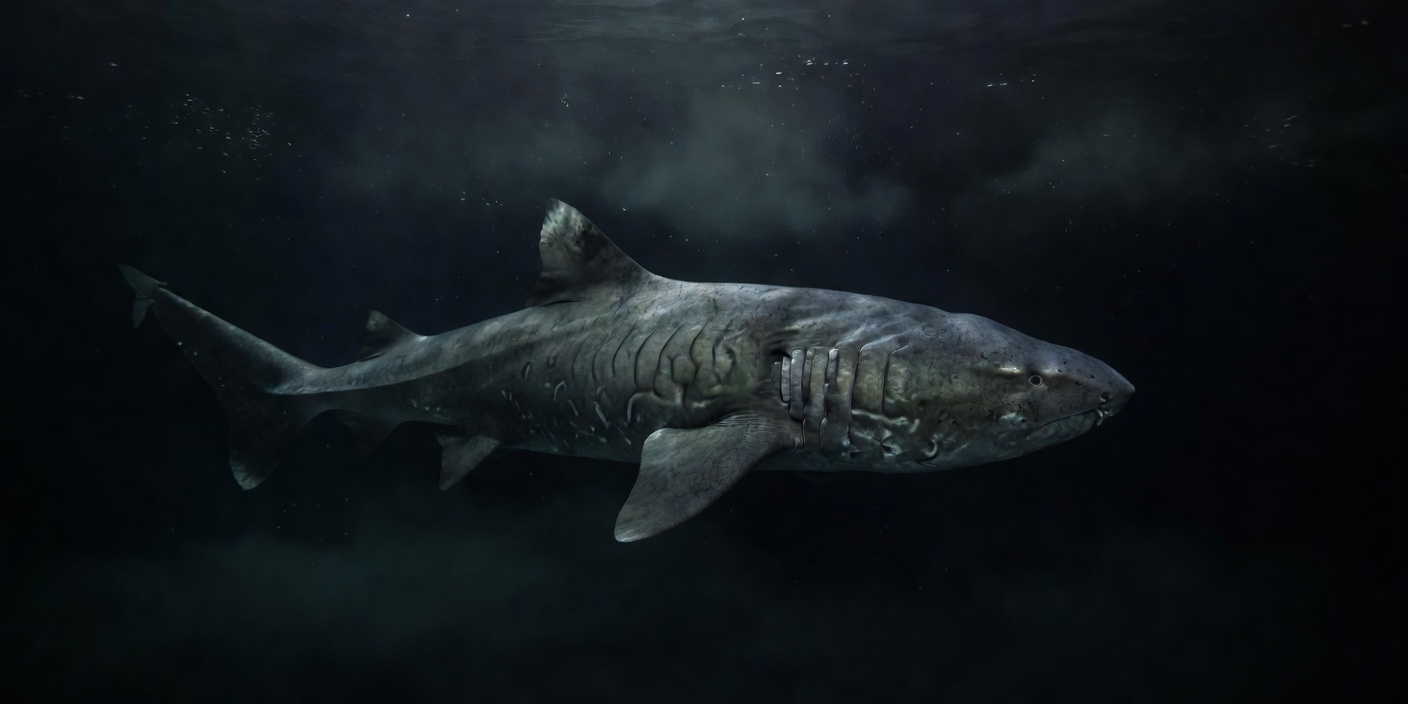
Greenland shark swimming in dark North Atlantic water, showing its thick body and small dorsal finArctic & North Atlantic

Greenland shark

Somniosus microcephalus

Look for: a bulky body, short rounded snout and relatively small fins. It uses deep water but can also occur nearer the surface in cold conditions.

Food: a varied diet of fish and other animals, with scavenging also part of its feeding ecology.

Conservation context: exceptionally slow growth and late maturity make fishing mortality a concern. Its remote habitat also makes population monitoring difficult.

Keep your identification grounded

Photographs and short descriptions are an introduction, not a complete identification key. Related species can look similar.